Handicap Transportation Service: Every Option Explained — and How to Pick the Right One
You searched “handicap transportation service” because somebody you love can’t safely ride in a regular car anymore — and the options you found are a confusing pile of acronyms: paratransit, NEMT, WAV, Medicaid brokers, volunteer vans. This guide untangles all of it: what each service actually is, what it costs, who qualifies, and the simple 3-level decoder that tells you which one your rider needs. Including the free options — honestly.
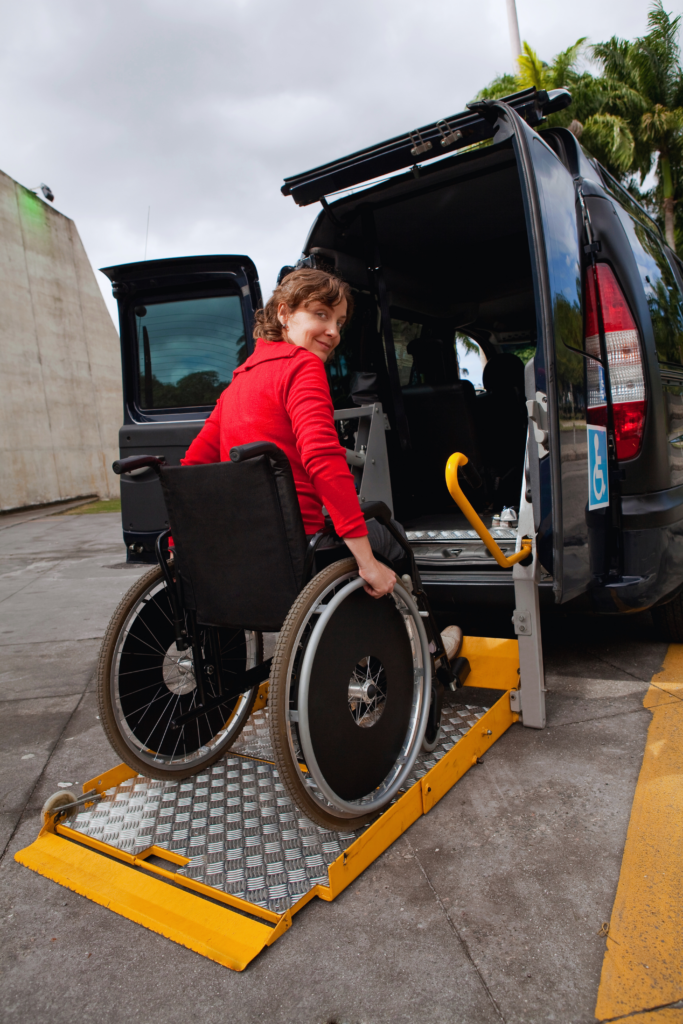
“Handicap transportation” (today called accessible or disability transportation) covers every ride service built for people who can’t use a standard car: wheelchair-accessible vans with ramps and 4-point securement, stretcher vehicles for riders who can’t sit up, and trained drivers who assist door-to-door. Your options: ADA paratransit (low-cost, shared, requires certification and advance booking), Medicaid NEMT (free for eligible members, via brokers), volunteer programs (free, limited equipment), rideshare WAV (spotty availability), and private accessible transport — anyone books, exact times, equipment matched to the rider, flat published rates. The decoder below tells you which level your rider needs; then match the trip to the service.
About the Term “Handicap Transportation”
Let’s handle the language honestly, because it matters. “Handicap transportation” is the phrase hundreds of families type into Google every month — it’s how a generation learned to name the service, from handicap parking placards and handicap-accessible buildings. The preferred terms today are accessible transportation, disability transportation, or simply naming the equipment: a wheelchair-accessible van, a stretcher vehicle. We use the modern language — and we’d never correct a family mid-phone-call, because what you call it matters far less than what your rider needs.
Which Level Does Your Rider Need? The 3-Level Test
Every accessible transportation decision starts here — and sending the wrong level is the #1 cause of failed pickups across the whole industry:
🚶 Walks — but needs help and a steady arm
Uses a cane or walker, manages a few steps, but needs assistance from the front door to the vehicle and into the appointment. A standard car seat works; a standard car service doesn’t — the help is the service.
♿ Rides in a wheelchair — manual or power
If the chair folds and the rider can transfer to a seat, some car-based options work. If it’s a power chair, a scooter, or the rider stays in the chair, you need a ramp- or lift-equipped van with 4-point securement — full stop. (All seven options compared: when the wheelchair won’t fit in the family car.)
🛏 Can’t sit upright — travels reclined or lying down
Bedbound riders, post-surgical discharges, hospice transfers. This is not an ambulance situation if the rider is medically stable — it’s a stretcher vehicle with a two-person team, bed-to-bed. (The distinction that saves families thousands: ambulance or medical transport?)
Every Handicap Transportation Option — Including the Free Ones
An honest map of the whole territory. Several of these are genuinely good programs worth applying for — the point isn’t that private is always right; it’s knowing which tool fits which trip:
ADA Paratransit LOW COST
The public, federally mandated shared-ride service for people whose disability prevents using regular buses — in Hampton Roads, run by the regional transit agency alongside its bus network. Strengths: very low fares, wheelchair-equipped vehicles. Trade-offs: an eligibility certification process, booking usually a day or more ahead, shared rides with pickup windows rather than exact times, and service tied to transit hours and coverage areas. Apply for it — it’s a valuable baseline for flexible trips.
Medicaid NEMT (broker rides) FREE IF ELIGIBLE
Virginia Medicaid covers rides to covered medical appointments for eligible members, arranged through the state’s transportation broker. Strengths: free, includes wheelchair vehicles. Trade-offs: eligibility rules, advance-request windows, assigned contractors, shared routes, and call-center service. (The full comparison: what “private” gets you instead.)
Volunteer driver programs FREE / DONATION
Senior centers, faith communities, and disability organizations often run volunteer rides. Strengths: free, kind people. Trade-offs: volunteers drive personal cars — folding equipment only, no securement, no stretcher — and availability depends on who’s free that day. Wonderful for errands; not a plan for treatment-critical trips.
Rideshare accessibility (Uber WAV / Assist) PAID · SPOTTY
WAV offers lift-equipped vehicles in a short list of big metros; Assist pairs willing drivers with riders who have folding equipment. Trade-offs: inconsistent availability outside major cities, no trained securement or door-through-door duty, and the driver lottery. Fine for an independent rider with a folding chair on a flexible trip; wrong for anything else.
Private accessible transportation (NEMT) FLAT RATE
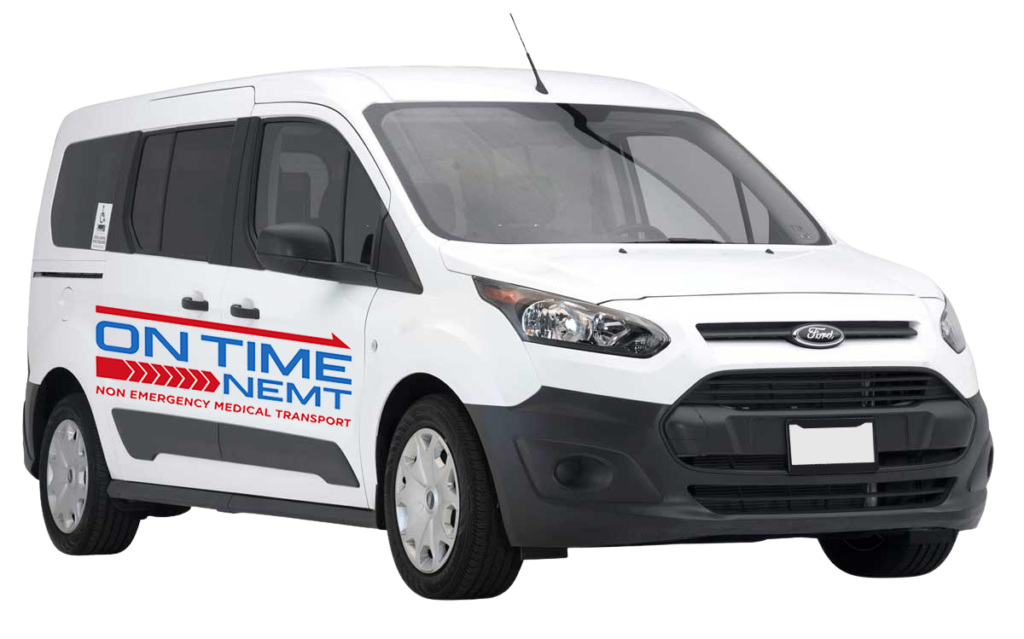
Direct-hire service built for all three levels: trained drivers whose job includes the assistance, wheelchair vans with 4-point securement, stretcher vehicles with two-person teams, exact scheduled times, standing schedules for recurring care, and door-through-door service into the appointment. No eligibility rules — anyone books. Rates are flat and published openly; receipts provided for plans that reimburse.
Families who handle this well run a blend: paratransit or Medicaid rides for routine, flexible trips where a window and a shared van are acceptable — and private accessible transport for the trips that can’t fail: dialysis, oncology, post-surgical follow-ups, and anywhere a missed pickup becomes a medical or family crisis. Free options are real; so are their limits. Match the stakes of the trip to the certainty of the service.
Accessible Transportation Across Hampton Roads
We’re the private option here at home — locally owned in Virginia Beach, covering all three levels every day: ambulatory assistance, wheelchair vans, and stretcher transport, plus senior transportation for everything beyond medical — family events, errands, anywhere:
Exact pickup times, trained drivers, flat published rates, and a real person at 1-757-440-3015 — with 5.0-star Google reviews and the promise on the van: on time, or the ride is free.
Frequently Asked Questions
What is a handicap transportation service?
Is “handicap transportation” still the right term?
What free options exist?
Paratransit vs. private — what’s the real difference?
Does Uber or Lyft do handicap accessible rides?
How much does private accessible transportation cost?
How do I book in Chesapeake, Norfolk, or Virginia Beach?
Keep Reading
Whatever You Call It —
We Send the Right Vehicle, On Time.
Describe your rider in one sentence, and we handle the rest: trained driver, matched vehicle, exact pickup time, door-through-door. Wheelchair, stretcher, or a steady arm.
Or call us directly: 1-757-440-3015On Time NEMT · 3837 Larchwood Drive, Virginia Beach, VA 23456 · Private-pay ambulatory, wheelchair & stretcher transport · Serving Chesapeake, Norfolk, Virginia Beach, and expanding across Virginia. On-time-or-free guarantee requires a scheduled pickup time that allows on-time arrival and rider ready at pickup. For medical emergencies, call 911.