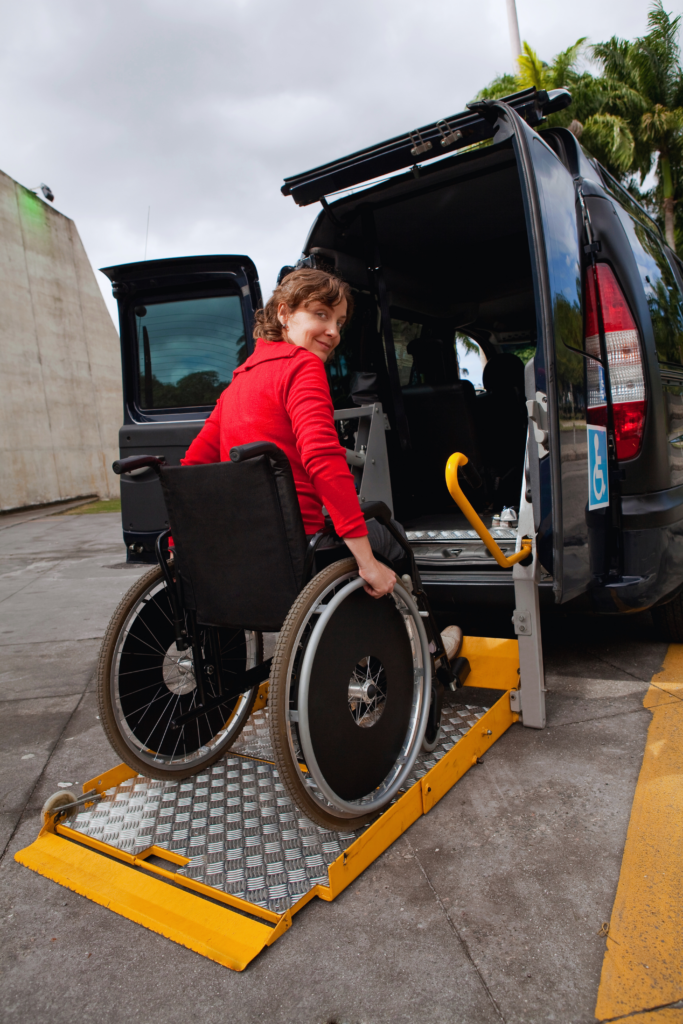
The New Standard in Medical Transportation: Reliability, Communication, and Accountability
Ask anyone who books medical rides — a dialysis patient, a daughter managing Mom’s appointments, a facility discharge planner — what the industry’s old standard was, and you’ll hear the same three complaints: the van was late, nobody called, and nobody answered for it. That standard failed the exact people who could least afford it. This is what we believe should replace it: three pillars, nine commitments, all measurable — and a checklist you can use to hold any provider to it. Including us.
The old standard in medical transportation — pickup “windows,” overbooked shared routes, call centers, and no consequences for failure — was built to serve brokers and volume, not riders. The new standard is built on three pillars: Reliability (exact pickup times, deliberate booking limits, standing schedules, a backup plan), Communication (a real person answers, details confirmed before every trip, proactive calls when anything changes), and Accountability (a consistent named team, published flat rates, and a guarantee with teeth — at On Time NEMT, on time or the ride is free). Use the 5-question checklist below on any provider. The right ones won’t flinch.
The Old Standard Failed — And It Wasn’t the Drivers’ Fault
Most medical transportation horror stories trace back to one structure: broker-assigned, volume-based trips. Contractors win rides by being cheapest. Routes are shared and overbooked because efficiency pays. Pickup “windows” stretch past an hour because no single rider’s schedule matters to the route. And when a trip fails, the broker, the contractor, and the call center can each point at one another — so nobody answers for it. The individuals aren’t villains; the structure simply never rewarded showing up on time for you. (We’ve written about what one late van does to an entire healthcare facility’s day — the damage compounds.)
The old standard
- Pickup “windows” — an hour of driveway-watching
- Overbooked, shared routes; strangers’ delays become yours
- A call center reading a screen when things go wrong
- A different driver, van, and excuse every trip
- No consequence when the ride fails — for anyone
The new standard
- Exact scheduled pickup times — to the minute
- Deliberate booking limits, so one delay can’t cascade
- A real person who knows your name answers the phone
- Consistent drivers your family actually recognizes
- A promise with teeth: on time, or the ride is free
What follows is each pillar in practice — not as slogans, but as commitments you can verify before you ever book.
Pillar by Pillar: What the Standard Requires
⏰ Reliability — the ride happens, on time, every time
Reliability isn’t a personality trait; it’s an operations decision made before the day begins. Three commitments make it real:
A 9:15 pickup means 9:15 — because the appointment it protects starts at 10:00, not “10-ish.” Windows exist for the route’s convenience; exact times exist for yours.
The old standard overbooks and hopes. The new standard leaves slack in the schedule on purpose, so one slow transfer or one backed-up bridge tunnel doesn’t topple every ride after it. Reliability is bought with restraint.
Recurring treatment deserves a ride that exists before anyone picks up a phone — same time, every session. And a professional operation plans for its own bad days: backup vehicles and coverage for driver absences, so your dialysis chair never inherits our maintenance schedule.
📞 Communication — you never wonder what’s happening
Half the misery of the old standard wasn’t lateness — it was silence. The new standard treats information as part of the service:
Not a phone tree, not a national call center. A person with the schedule in front of them and the authority to change it. That’s the whole test of whether a company wants to hear from you.
Pickup time, vehicle type, mobility needs, escort riding along — locked in and confirmed before the day, in writing when you want it. Surprises belong in birthday parties, not medical transportation.
If anything shifts, you hear it from us before you notice it in the driveway. And family access is part of this: an out-of-town daughter booking for her mother gets the same confirmations as if she lived next door.
🤝 Accountability — someone answers for the outcome
The deepest failure of the old standard: when things went wrong, responsibility evaporated. The new standard makes it impossible to lose:
Drivers your family recognizes, vetted and background-checked, who know that Mrs. Wilson needs an arm on the porch steps. Accountability starts with being identifiable — the opposite of the driver lottery.
The quote is the bill. Rates live in public on our pricing page — flat, no surge, no rush fees — because a company that hides its prices is rehearsing to hide other things.
Anyone can promise punctuality; the question is what happens when the promise breaks. Our answer is the name on the van: on time, or the ride is free. A consequence we pay — not one you absorb. That single sentence forces every other commitment on this page to be true, because we can’t afford for it not to be.

The 5-Question Test — Use It on Any Provider (Including Us)
Standards only matter if riders enforce them. Before you book with anyone — us included — ask these five questions. A provider operating to the new standard answers all five instantly; a provider built on the old one starts explaining:
Ask every company:
Write down the answers. They’re your service agreement in miniature.
- Will you commit to an exact pickup time — not a window?“We’ll be there between 8 and 9” is the old standard talking.
- What happens when you’re late — is there a stated consequence?Ours: the ride is free. If a company has never considered the question, it’s never planned on being accountable.
- Who answers the phone if something changes at 6am?A name and a local number beat a call center every time.
- Will you confirm the details in advance — with me or my out-of-town family?Vehicle type, time, mobility needs, escort — before the day, not during it.
- Are your rates published where I can see them before I call?Transparent pricing is accountability you can verify in ten seconds.
No standard makes a company perfect — vans hit traffic, and Hampton Roads has bridge tunnels. The difference is what happens next: under the old standard, a failure became your problem; under the new one, it becomes ours — the proactive call, the backup plan, and the guarantee are all answers to the question “what if something goes wrong?” A provider that has answers planned is a provider you can build a treatment schedule on. And one more honest note: for a fully mobile rider on a flexible errand, a free broker ride or a rideshare may serve you fine — the new standard matters most when the trip can’t fail.
The Standard, Applied Across Hampton Roads
We didn’t write this standard as a think piece — we built a company on it, because two of our founders watched the old standard fail people they cared about. Every commitment above is how our services actually run today — ambulatory, wheelchair, and stretcher, from single appointments to standing dialysis schedules to same-day dispatch:
The proof isn’t this article — it’s our 5.0-star Google reviews, our published rates, and a phone number a real person answers: 1-757-440-3015. Ask us the five questions. We built the company to pass.
Frequently Asked Questions
What makes a medical transportation company reliable?
What should communication look like?
What does accountability actually mean here?
Why was the old standard so unreliable?
How do I hold a provider to this standard?
Does the new standard cost more?
Keep Reading
The Standard Isn’t a Slogan.
It’s a Phone Call Away.
Exact times. A real person. A guarantee we pay for, not you. Ask us the five questions — then book the ride that meets the standard.
Or call us directly: 1-757-440-3015On Time NEMT · 3837 Larchwood Drive, Virginia Beach, VA 23456 · Private-pay ambulatory, wheelchair & stretcher transport · Serving Chesapeake, Norfolk, Virginia Beach, and expanding across Virginia. On-time-or-free guarantee requires a scheduled pickup time that allows on-time arrival and rider ready at pickup. For medical emergencies, call 911.