Post-Surgery Rides Home: Your Options When You Can’t Drive Yourself
The colonoscopy is scheduled, the paperwork says “a responsible adult must drive you home” — and you’re staring at the sentence thinking: I live alone. My kids are three states away. Everyone I’d ask works Tuesdays. You’re not the only one; it’s one of the most common pre-op problems there is, and it has real solutions. Here are your options, ranked — including the professional route that satisfies most surgery centers when there’s no family driver to call.
After anesthesia you can’t drive, and a rideshare alone won’t satisfy your surgery center — they require a responsible adult or an approved professional escort, and they postpone procedures over it (the full rulebook is here). When you don’t have a built-in driver, your options ranked: a friend or family member if one can truly commit; professional medical transportation with a trained door-through-door escort — accepted by many facilities, with wait-and-return and a pharmacy stop built in; a nursing or home-care escort when your procedure also requires supervision at home afterward; and your facility’s own resources — schedulers and social workers know what other solo patients use. Book it the week you schedule, put the plan on file, and the procedure happens on time.
It’s Actually Two Problems — The Ride, and the Responsible Adult
Here’s what catches solo patients off guard: the pre-op instruction isn’t really about transportation. Anyone can summon a car. What the facility requires is a person — someone who signs you out, receives your discharge instructions while your anesthesia-fogged brain can’t, and makes sure you get safely inside your home. A car gets you to the curb; the requirement is about the fifty feet after it.
That’s why “I’ll grab an Uber” fails at check-in, and why the options below are ranked by how completely they solve the person problem — not just the car problem. (For the full breakdown of what facilities accept and refuse, see Transportation After Surgery: The Ride Your Surgery Center Will Actually Accept — this guide picks up where that one leaves off, for the patient with nobody to call.)
Your Options, Best Fit First
👪 A friend, neighbor, or family member who can truly commit
Still the gold standard when it exists — free, familiar, and automatically satisfies every facility. The honest catch for solo patients: it requires someone who can burn half a workday, and asking feels like a bigger favor than people admit. If you have the person, ask early and confirm twice. If each candidate comes with a “maybe” — treat that as a no and solve it professionally, because a maybe that evaporates on surgery morning cancels the procedure.
🚐 Medical transportation with a trained escort — built for exactly this
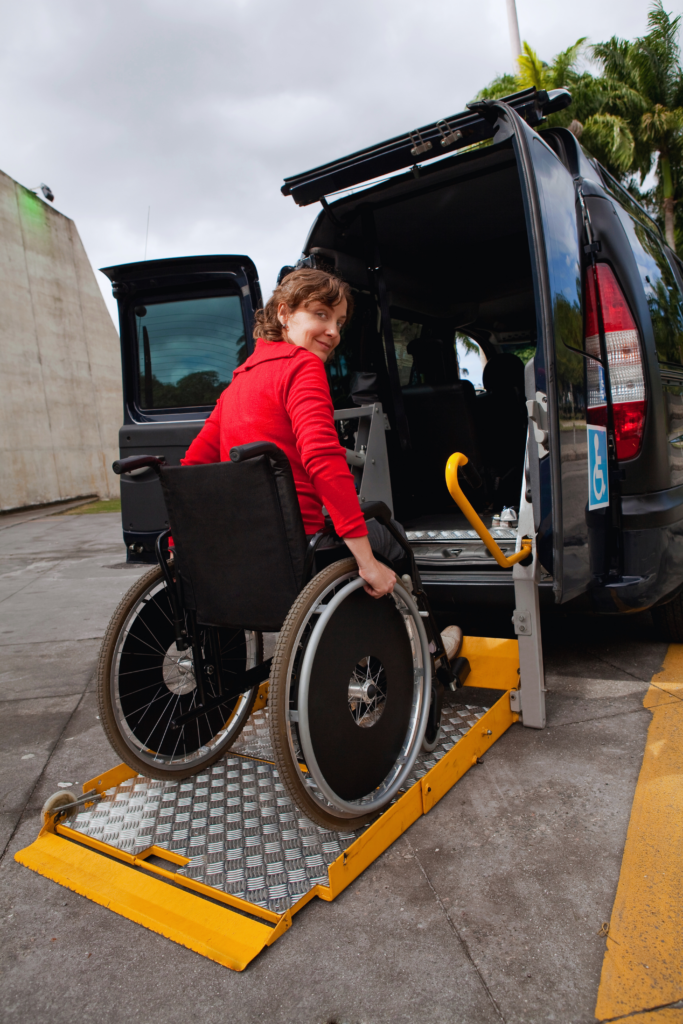
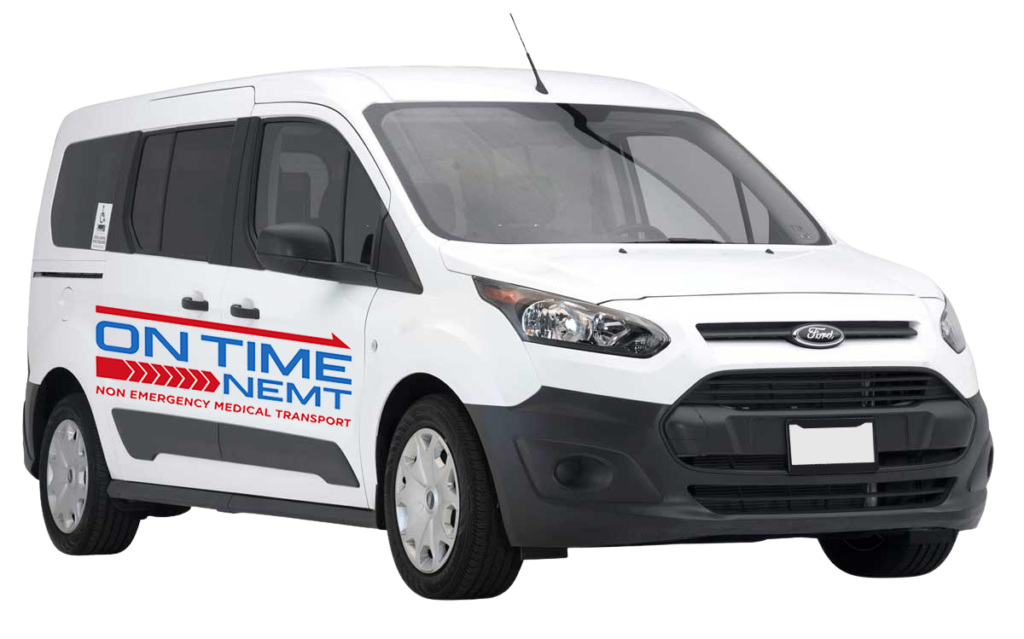
A professional NEMT driver does what the rideshare can’t: they’re on file as your plan, they can wait during shorter procedures so your ride is already in the lot at discharge, they receive you from the recovery nurse, build in the pharmacy stop for your prescriptions, and walk you through your own front door — settled, not curbside. Many facilities accept a licensed medical transport provider in place of a personal escort; confirm with yours when you book, and we’ll coordinate directly with the discharge desk. Wheelchair vans and stretcher vehicles cover bigger procedures.
🩺 A nursing or home-care escort for the bigger procedures
Some surgeries come with a second requirement: someone must stay with you for hours (sometimes a full day) afterward. A transportation escort solves the ride; it doesn’t solve the night. For those procedures, home care agencies offer aides by the hour, and some nurse-escort services handle both the ride and the supervision. Many of our solo clients pair the two: our ride home, an aide for the first evening.
🏥 Your facility’s own resources — just ask
Tell the scheduler plainly: “I don’t have anyone to drive me — what do your other patients do?” Surgery centers field this daily and many keep a list of transportation providers they accept; hospital social workers and case managers can point to local programs. Asking early turns the staff into allies instead of the people who cancel your slot at check-in.
✗ What doesn’t work — and gets procedures canceled
An Uber, Lyft, taxi, or bus — alone. The driver can’t sign you out or take responsibility for you, and facilities refuse the plan at check-in. (The full rideshare reality check.)
Driving yourself — even “just a mile,” even after a “light” sedation. Impairment outlasts the feeling of it.
The vague plan. “My neighbor might” with no name on file reads as no plan. Facilities act accordingly.
The Solo Patient’s Playbook
Patients with family have a built-in safety net; solo patients build theirs in advance. Seven steps, in order:
Before surgery day:
Do these the same week you schedule the procedure.
- Book the ride first, not last.Your pre-op paperwork will ask for the plan — have it ready: 1-757-440-3015, and we put it on file.
- Ask the center two questions.“Do you accept a licensed medical transportation provider as my ride?” and “Does someone need to stay with me afterward — for how long?”
- Take the earliest slot offered.Morning procedures mean afternoon recovery with the whole day’s safety margin — and the best ride availability.
- Plan the pharmacy stop into the ride.Pain meds can’t wait for a second trip you can’t make. Tell us at booking; the driver waits while it’s filled.
- Stage the house for one-trip living.Water, meds, snacks, phone charger, and the TV remote within reach of where you’ll land. Future-you will be sore and foggy — set them up.
- Line up a check-in call.If nobody can stay, someone can still call at 7pm. Tell them what time to worry.
- For bigger procedures, book the first-night aide.A few hours of home care turns “technically allowed to go home” into “actually safe at home.”
If your care team says you need someone with you for 24 hours and you truly have no one — don’t game it with a story at check-in. Tell them. Facilities have seen every version of recovering alone and would far rather solve it with you beforehand (an aide, an extended recovery stay, a rescheduled date when family visits) than discover it after. The system bends for honesty; it cancels for surprises.
The Solo Patient’s Ride, Across Hampton Roads
Out-of-town family can book and pay for all of this remotely — a daughter in Denver can have the plan on file with a Virginia Beach surgery center in one phone call. We run surgery-day trips to and from the region’s hospitals, outpatient centers, endoscopy suites, and eye centers — Sentara Virginia Beach General and Princess Anne, Sentara Norfolk General and the EVMS corridor, Chesapeake Regional, and the surgery centers around them:
Flat published rates, wait-and-return with no meter anxiety, 5.0-star reviews full of surgery-day saves — and the promise on the van: on time, or the ride is free. Call 1-757-440-3015 and a real person answers.
Frequently Asked Questions
I have no one to drive me home — will my procedure be canceled?
Can the surgery center arrange the ride for me?
What does the professional driver actually do?
Do I need someone to STAY with me after, if I live alone?
Can I just take an Uber or taxi home?
How do I book, and what does it cost?
Keep Reading
No Driver? You Still Have a Plan.
Trained escort, wait-and-return, pharmacy stop, and a transportation plan your surgery center can put on file — booked in one call, even by family across the country.
Or call us directly: 1-757-440-3015On Time NEMT · 3837 Larchwood Drive, Virginia Beach, VA 23456 · Ambulatory, wheelchair & stretcher transport · Serving Chesapeake, Norfolk, Virginia Beach, and expanding across Virginia. On-time-or-free guarantee requires a scheduled pickup time that allows on-time arrival and rider ready at pickup. For medical emergencies, call 911. Always follow your surgeon’s discharge instructions.