Transportation After Surgery Near Me: The Ride Your Surgery Center Will Actually Accept
Somewhere in your pre-op paperwork is a line most patients skim past: you must have a responsible adult transport you home. They mean it. Show up for a colonoscopy, cataract surgery, or same-day procedure with “I’ll just grab an Uber” as your plan, and there’s a real chance the procedure doesn’t happen that day. Here’s what actually counts as approved transportation after anesthesia, how to lock it in before the facility asks, and how it works when family can’t be there.
After sedation or anesthesia, surgery centers require a responsible adult — someone who signs you out, receives your discharge instructions, and gets you safely inside your home. A rideshare or taxi alone doesn’t qualify, and facilities delay or cancel procedures over it. Your compliant options: a family member or friend, or a professional medical transportation provider whose trained driver escorts you door-through-door — accepted by many facilities (confirm with yours). Book the ride the same week you schedule the procedure, tell us if you need the driver to wait during it, and plan the pharmacy stop into the trip home.
No Approved Ride, No Procedure
This is the part that blindsides people: the transportation requirement isn’t a suggestion, and it isn’t about your driving skills. Anesthesia and sedation impair judgment, coordination, memory, and reflexes for hours after you feel “fine” — and the facility carries the legal responsibility for how you leave. So they enforce a simple standard: a responsible adult takes custody of you at discharge. No adult, no discharge — and increasingly, no adult on file, no procedure. Patients across the country get delayed or canceled every week over exactly this.
⚠️ The Ride Rule
Your surgery center will ask for your transportation plan before your procedure — some verify it at check-in. Arrange the ride the same week you schedule the surgery, not the night before. It’s the cheapest insurance in medicine: it protects the procedure you’ve already waited weeks for.
Two questions settle your facility’s exact policy when you schedule: “Do you accept a licensed medical transportation provider as my ride home?” and “Does someone need to stay with me at home afterward?” Most accept professional transport for the ride itself; some procedures also require supervision at home for several hours — good to know before, not after.
What Kind of Transport Your Surgery Actually Needs
🩺 Colonoscopy · endoscopy · cataract surgery · dental sedation
Ambulatory service with a steadying arm: the driver checks you in with the desk if needed, is on file as your ride, signs you out, and walks you from recovery to the vehicle to inside your front door. This is the bread-and-butter post-sedation trip.
🦵 Knee, hip, foot & ankle procedures · joint injections
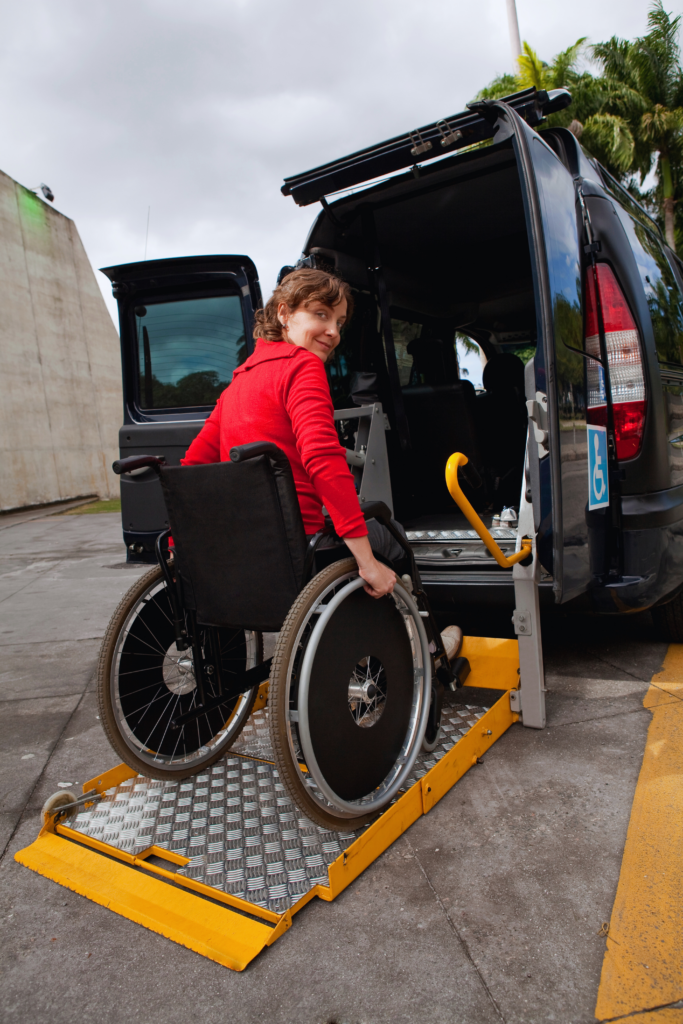
A wheelchair-accessible van spares you weight-bearing, awkward car transfers, and the parking-lot hobble. Ride secured in the chair or transfer to a seat — whichever your surgeon prefers.
🛏️ Major surgery discharges · anything where sitting hurts
Stretcher transport, bed-to-bed: a two-person team moves you from the hospital bed to the vehicle to your own bed, reclined the whole way. (Not sure whether that’s a stretcher trip or an ambulance? Our three-question guide sorts it in 60 seconds — the short version: stable but lying down is a stretcher van, not an ambulance.)
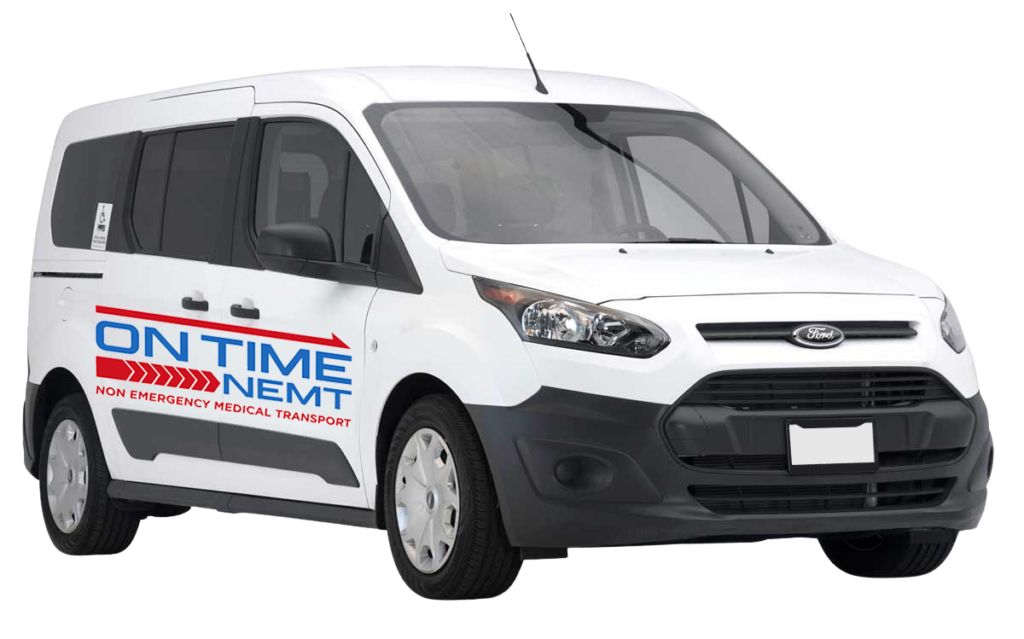
The Surgery-Day Ride, Done Right
A post-surgery trip isn’t a pickup — it’s a small operation with four moving parts, and a good provider handles all of them:
- The morning run, on time: surgery check-ins are early and unforgiving — this is exactly what our on-time-or-free promise exists for. Your driver assists you in and confirms you’re checked in.
- The wait-and-return: for shorter procedures, the driver stays nearby through your procedure and recovery, so when the nurse says “you’re cleared,” your ride is already in the lot — no groggy phone calls. For longer procedures, we schedule the return and coordinate with the recovery desk, flexing when discharge runs early or late (it usually does).
- The pharmacy stop: pain meds and antibiotics can’t wait for a second trip. Tell us at booking and it’s built into the route — the driver waits while it’s filled.
- The last fifty feet: door-through-door means through — into the house, settled, packages and paperwork inside, before the driver leaves. After anesthesia, the walk from the curb is where falls happen; nobody should do it alone.
One more honest note: if you live alone, ask your care team whether your procedure requires someone with you for the first hours at home. Transportation solves the ride; some procedures also need a person on the couch. Knowing which one yours is — before surgery day — is the whole game.
Surgery Transportation Across Hampton Roads
“Near me” should mean actually near: we’re locally owned in Virginia Beach and run surgery-day trips to and from the region’s hospitals, outpatient surgery centers, endoscopy suites, and eye centers — Sentara Virginia Beach General and Princess Anne, Sentara Norfolk General and EVMS-area facilities, Chesapeake Regional, and the surgery centers around them:
Booking takes one call: procedure date, check-in time, facility, and whether you’d like wait-and-return. We put the plan on file so your pre-op nurse hears “handled” — and our flat rates are published openly, with no meter running while you’re in recovery on a scheduled return. Our 5.0-star reviews include more than a few surgery-day saves.
Frequently Asked Questions
Can I take an Uber home after surgery?
What counts as approved transportation after anesthesia?
What happens if I don’t have a ride?
Will the driver wait during my procedure?
Can we stop at the pharmacy on the way home?
What vehicle do I need for my procedure?
How far ahead should I book?
Keep Reading
Your Procedure Is Scheduled.
Now Lock In the Ride That Protects It.
Trained escort, wait-and-return, pharmacy stop, and a plan your surgery center can put on file — booked in one call, on time or it’s free.
Or call us directly: 1-757-440-3015On Time NEMT · 3837 Larchwood Drive, Virginia Beach, VA 23456 · Ambulatory, wheelchair & stretcher transport · Serving Chesapeake, Norfolk, Virginia Beach, and expanding across Virginia. On-time-or-free guarantee requires a scheduled pickup time that allows on-time arrival and rider ready at pickup. For medical emergencies, call 911.