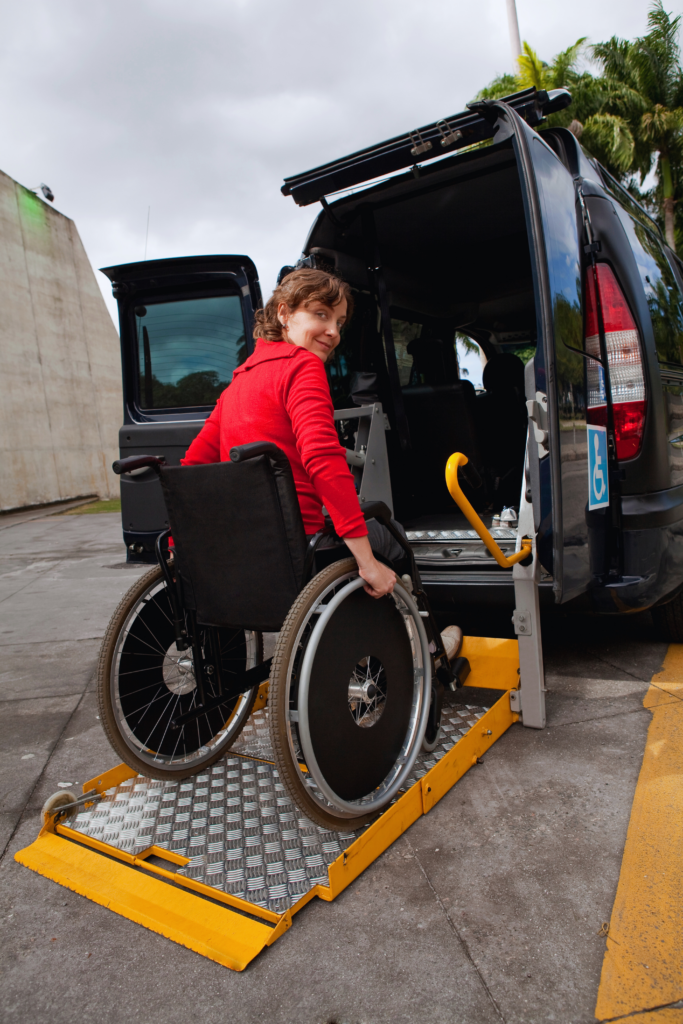
Why 30% of Patient Delays Start with Transportation Issues
A statistic gets quoted everywhere in healthcare logistics — but almost nobody answers the question behind it. Here’s the real story: the six structural root causes, the peer-reviewed evidence that backs them up, and what healthcare facilities can actually do about it.
If you’ve spent any time in healthcare administration, healthcare logistics blogs, or care-coordination LinkedIn discussions, you’ve seen the statistic. “Up to 30% of patient care delays stem from inefficient scheduling and communication.” It gets quoted in software demos. It anchors transportation-tech sales pitches. It appears in industry whitepapers, vendor blogs, and conference keynotes.
But almost nobody — and we mean almost nobody — actually answers the question that follows. Specifically: why? Why is it transportation, of all the moving parts in modern healthcare, that drives 30% of patient delays? What are the actual mechanisms? And once you understand them, what can a healthcare facility realistically do?
That’s what this article does. We’ll cite the peer-reviewed research that grounds the 30% figure, walk through the six structural root causes that produce it, and connect each one to a concrete operational fix that facility leaders can implement without buying a single piece of software.
What’s in this article
- Where the 30% number comes from
- Cause 1 — Late pickups
- Cause 2 — Same-day no-shows
- Cause 3 — Self-imposed delays
- Cause 4 — Communication failures
- Cause 5 — Driver inconsistency
- Cause 6 — Cascading downstream delays
- Why this is the most fixable problem
- The fix in plain English
- Virginia healthcare facilities
- Frequently asked questions

Where the 30% Number Actually Comes From
Before we explain why it happens, let’s verify it’s real — because in healthcare a lot of viral statistics turn out to be made up. This one isn’t.
The 30% figure traces to multiple converging sources in the healthcare logistics literature. Industry analyses repeatedly cite that up to 30% of patient care delays stem from inefficient scheduling and communication, with transportation being the dominant driver of that scheduling and communication breakdown. But the most rigorous evidence comes from peer-reviewed clinical research, not vendor whitepapers.
A landmark systematic review published through PubMed Central — Traveling Towards Disease: Transportation Barriers to Health Care Access — synthesized dozens of studies on transportation barriers to medical care. The findings:
In other words: the 30% figure isn’t an outlier. It’s the industry midpoint. Depending on the patient population and care setting, the real number can run higher.
The Six Structural Causes Behind the 30%
Patient transportation isn’t one mechanism. It’s six. Each one independently contributes to the 30% delay statistic, and most facilities are dealing with all six simultaneously. Here they are, in rough order of impact.
Late Pickups in Broker-Dispatched NEMT
The most common form of transportation-caused delay is also the most predictable. A patient is scheduled for an 8:00 AM appointment. The broker assigns the trip the night before. The dispatched driver is on a route already running 30 minutes behind because of an earlier pickup that ran long. The patient gets picked up at 7:55. Arrives at 8:35. Treatment slot becomes a partial slot. Daily schedule cascades.
Why this is structural: Medicaid broker NEMT operates on volume-driven economics that incentivize aggressive route consolidation. Schedule slack — the buffer time that prevents one delay from becoming five — costs money the broker model isn’t built to absorb. Late pickups aren’t a vendor failure; they’re a feature of the dispatch model.
Same-Day No-Shows and Cancellations
Worse than late: no ride at all. The 4:45 AM phone call from the broker. The patient calling the facility wondering where their ride is. The chair in the dialysis center sitting empty. The hospital bed that won’t clear. The follow-up appointment that gets rescheduled six weeks out.
Same-day cancellations happen when broker dispatch falls behind on demand and reassigns trips at the last minute, when subcontracted drivers call out and aren’t replaced, or when route consolidation hits its ceiling. Every same-day cancellation creates a cascade — every appointment after it on the patient’s care plan slides too.
Patient Self-Imposed Delays
This is the cause most administrators miss. After patients experience repeated transportation failures, they start self-canceling. They cancel appointments because they don’t trust the ride will come. They postpone follow-ups. They delay scheduling needed care because they remember the last three rides that ran late or never came.
This is invisible in most facility metrics — the patient cancels before the appointment, so the no-show data doesn’t capture it. But the downstream clinical consequence is real: medication non-adherence, missed lab work, deferred specialist visits, and worsened chronic disease management.
Communication Failures Across the Chain
Patient transportation involves at least four parties: the patient, the healthcare facility, the broker (or scheduling intermediary), and the driver. Information has to flow accurately and in real time among all four. It almost never does.
Common failure modes: the facility reschedules the appointment but the broker isn’t notified; the broker reassigns the driver but the patient isn’t told; the driver runs late but doesn’t communicate to dispatch; the patient cancels but the ride still arrives. Each communication gap creates a delay event.
Driver Inconsistency for Vulnerable Patients
For dementia patients, post-stroke patients, anxiety-prone elderly patients, and patients with cognitive impairment, the same driver matters clinically. Familiarity reduces patient anxiety, ensures the driver knows mobility specifics, and makes timely pickup more likely (the driver knows the apartment number, the elevator, the buzzer that doesn’t work).
Broker dispatch optimizes for vehicle utilization, not driver continuity. Most patients on broker NEMT see a different driver every week. For vulnerable populations, this generates delays in two ways: patients refuse to leave with unfamiliar drivers, and unfamiliar drivers take longer to navigate the pickup process.
Cascading Downstream Delays
One missed transport rarely produces just one delay. It produces a chain of them. A missed dialysis session means a rescheduled session two days later that displaces another patient’s slot. A late hospital discharge means the next admission waits in the ED. A missed pre-op clearance appointment means the surgery itself gets deferred.
This is why transportation delays count for a disproportionate share of total patient delays: each transportation event affects two to four downstream appointments on average. The 30% figure isn’t measuring transportation events directly — it’s measuring the total delay footprint, of which transportation is the upstream cause.
Why Transportation Is the Most Fixable Source of Patient Delay
Healthcare administrators face dozens of contributors to patient delay: clinical complexity, comorbidity, EHR documentation overhead, staffing shortages, prior-authorization friction, payer disputes, lab turnaround time. Most of these are slow, structural, and require year-long initiatives to move.
Transportation is different. Of every major contributor to patient delay, transportation is the most operationally tractable — the one a facility can meaningfully improve in 30 to 90 days at the facility level, without an EHR migration, without a payer renegotiation, without a hiring cycle.
🏥 Clinical complexity
Years to address. Requires care-model redesign, specialist recruitment, evidence-base evolution.
👩⚕️ Staffing shortages
12–24 month timeline. Subject to labor market dynamics far outside facility control.
💻 EHR documentation overhead
Multi-year vendor relationships. Workflow optimization is incremental at best.
💳 Prior-authorization friction
Payer-driven. Requires national policy change to materially shift.
🩺 Lab turnaround
Constrained by physical specimen flow and instrument capacity.
🚐 Transportation reliability
30 to 90 days. Add a private-pay reliability tier, operationalize standing orders, measure weekly. Done.
The strategic insight: The 30% transportation-delay statistic is the cost-effective place to start fixing patient delays. Every other major delay driver requires longer timelines and bigger budgets. Transportation is the one your facility can move next quarter.
The Fix in Plain English
The fix is not technology. It’s not a new EHR module. It’s not an AI dispatch platform. It’s structural and simple: add a private-pay reliability tier alongside your existing broker NEMT.
The two models coexist cleanly. Broker NEMT continues to handle the routine volume — and continues to be free to qualifying patients under Medicaid rules. The private-pay tier handles the patients and routes where reliability has to be guaranteed: high-stakes appointments (dialysis, infusion, post-surgical follow-up), the 10–15% of patients responsible for most of the chaos, or facility-wide same-day rescue when broker dispatch falls through.
- Step 1: Measure the chaos. 30 days of structured tracking on late-arrival rate, no-show rate, discharge delays, and staff coordination hours.
- Step 2: Identify the failure cluster. Typically 70% of the disruption traces to 10–20% of patients on specific broker routes.
- Step 3: Add the reliability tier. Contract a private-pay NEMT provider for either per-patient replacement or facility-concierge backstop.
- Step 4: Operationalize. Standing orders, single dispatcher, communication SLA, weekly metric review.
For the full operational playbook with concrete metrics and timelines, see our companion article: From Chaos to Control: Fixing Transportation Issues in Healthcare Facilities. The financial case — what unreliable NEMT actually costs your facility per year — is documented in Breaking Down the Real Cost of Unreliable NEMT.
A Note for Virginia Healthcare Facilities
On Time NEMT is headquartered in Hampton Roads and serves healthcare facilities in Chesapeake, Norfolk, and Virginia Beach as our core operating market. We currently work with patients across every major regional dialysis network, Sentara-affiliated programs, and independent specialty clinics — providing the reliability tier that addresses the 30% transportation-delay problem documented above.
We’re rapidly expanding our service footprint across the Commonwealth. We currently take long-distance medical transports up to 240 miles, and we’re actively building partnerships with healthcare facilities in Portsmouth, Suffolk, Newport News, Hampton, Williamsburg, Richmond, Petersburg, Charlottesville, Roanoke, and Northern Virginia. If your facility is somewhere we haven’t yet built dedicated capacity, that doesn’t mean we can’t help — it means the conversation should start sooner rather than later.
You can also explore our service overview pages for Chesapeake, Norfolk, and Virginia Beach, or see our pricing and about pages for more on how we operate.
📚 Cited Research & Evidence Base
- Traveling Towards Disease: Transportation Barriers to Health Care Access — peer-reviewed systematic review (PMC / National Library of Medicine)
- CMS — Non-Emergency Medical Transportation — federal regulatory framework for Medicaid NEMT
- Federal Transit Administration — NEMT Resources — federal coordination and grant programs
Frequently Asked Questions
Why do 30% of patient delays start with transportation issues?
Up to 30% of patient care delays trace to transportation because of six structural root causes: late pickups in broker-dispatched NEMT, same-day no-shows that cascade through facility schedules, patients self-delaying or canceling appointments due to transport uncertainty, communication failures across the broker-driver-facility-patient chain, driver inconsistency that disrupts routine for vulnerable patients, and cascading downstream effects where one missed transport disrupts multiple appointments. Peer-reviewed research published through the National Library of Medicine corroborates these findings — one systematic review noted 50% of patients with histories of missed appointments cited transportation problems specifically.
Is the 30% patient delay statistic accurate?
Yes — and depending on the patient population, it may be conservative. Multiple healthcare logistics analyses cite the 30% figure for general patient care delays. Peer-reviewed research published by PMC found that 50% of patients with a history of missed appointments cited transportation problems as the cause. Combined no-show rates of 26% have been documented in primary care populations specifically due to transportation barriers. The 30% figure is the industry midpoint, not an outlier.
What types of patient delays are caused by transportation?
Transportation issues cause five distinct categories of patient delay: appointment delays where patients arrive late and receive shortened or rescheduled care; outright no-shows where patients never arrive and lose their appointment slot; discharge delays where hospital beds are held longer than medically necessary because transport home isn’t confirmed; downstream cascade delays where one missed appointment disrupts follow-ups, lab work, and medication timing; and self-imposed delays where patients postpone or cancel needed care because they don’t trust their transportation will show up.
How can healthcare facilities reduce transportation-related patient delays?
Healthcare facilities reduce transportation-related delays by adding a private-pay reliability tier alongside their existing broker NEMT — typically a contracted private-pay provider that handles either the highest-disruption patient cohort or operates as a same-day backstop for the entire facility. Combined with operational practices like standing-order schedules, single-point-of-contact dispatch, and weekly performance review, most facilities see measurable reductions in late arrivals and no-shows within 30 days. The full operational playbook is documented in our companion article on fixing transportation issues in healthcare facilities.
Does Medicaid NEMT prevent or cause patient delays?
Both. Medicaid NEMT is structurally well-intentioned — federal regulations require state Medicaid programs to provide transportation to medical appointments, and for patients without other options, the benefit prevents enormous numbers of missed appointments that would otherwise occur. However, the broker-dispatch economics that govern most state Medicaid NEMT programs incentivize route consolidation and overbooking, which produces the very delays the benefit was designed to prevent. The Medicaid NEMT benefit reduces transportation barriers for patients who would otherwise have none, while simultaneously generating reliability problems for facilities that depend on those patients arriving on time.
Does On Time NEMT serve healthcare facilities outside Hampton Roads, Virginia?
Yes. On Time NEMT is headquartered in Hampton Roads — actively serving healthcare facilities in Chesapeake, Norfolk, and Virginia Beach. We are rapidly expanding our service footprint across the Commonwealth of Virginia and currently take long-distance medical transports up to 240 miles. Healthcare facilities elsewhere in Virginia interested in a reliability-tier NEMT partnership are encouraged to call 1-757-440-3015 to discuss coverage.
What is the difference between transportation-caused delays and other patient delays?
Transportation-caused delays are uniquely modifiable. Many patient delays — clinical complexity, comorbidity, staff shortages, EHR documentation overhead — require clinical or systemic interventions that take months or years to implement. Transportation-caused delays, by contrast, can typically be addressed at the facility level within 30 to 90 days through targeted reliability-tier partnerships. The 30% figure represents the most operationally tractable share of total patient delay — the cost-effective place to start fixing the problem.
Related Reading
From Chaos to Control
The full four-step operational playbook for fixing transportation chaos at healthcare facilities. Vendor-neutral, 30-day timeline, measurable improvement.
Read the Playbook →The #1 Complaint About NEMT
The deep-dive on why unreliability is the most common complaint from dialysis centers, with specific operational fixes and measurable timelines.
See the Complaint →The Real Cost of Unreliable NEMT
A worked-scenario financial analysis showing the actual dollar cost of late and missed NEMT trips at a 20-chair dialysis facility — and how reliable alternatives pay for themselves.
See the Numbers →The 30% Doesn’t Have to Be Permanent.
If you run a hospital, dialysis center, skilled nursing facility, rehab center, or specialty clinic anywhere in Virginia, and the patterns in this article look like your operation — we’d be glad to walk through what a reliability-tier transportation partnership would look like for your specific facility. No pitch deck. No pressure. Just numbers on paper.