How to Plan Medical Transportation for a Parent with Dementia — Without the Meltdown, the Guilt, or the Guesswork
If you’re reading this, you already know the vehicle is the easy part. The hard part is that your mom or dad may not understand where they’re going, why, or who the stranger helping them is — and an ordinary ride to the neurologist can spiral into a distressing morning for everyone. Here’s the good news most families don’t hear: almost everything that makes these trips go well is within your control. Timing, preparation, what you say, what you pack, and who you choose to drive. This guide walks through all of it, step by step.
To plan medical transportation for a parent with dementia:
- Schedule the trip during their calmest time of day — usually mid-morning, never sundowning hours
- Tell them simply, warmly, and close to departure time — don’t announce it days ahead
- Pack familiar comfort items plus a practical kit
- Brief the transport company on their stage, name, triggers, and mobility needs
- Book door-to-door service with an escort — never curb-to-curb
- Ride along, or arrange a familiar face at both ends
- Plan the return trip as carefully as the outbound one
Each step matters more than it looks — and skipping one is usually where trips go wrong. Below is the full playbook, plus the questions that reveal whether a transport company can genuinely handle a rider with dementia, and a day-of checklist you can save to your phone.
Why Transportation Is Different When Dementia Is Involved
Dementia affects memory, orientation, and the ability to process new information — which means a car ride quietly demands almost everything the condition makes difficult. A new vehicle. An unfamiliar person. A break in routine. Movement, noise, transitions, and a destination your parent may not remember agreeing to. What looks like stubbornness or “being difficult” is usually just the brain doing its best with information it can’t hold onto.
Three things follow from that, and they shape everything in this guide:
Routine is medicine. The more a trip resembles a normal, calm part of the day — same morning rhythm, familiar objects, unhurried pace — the better it goes.
Timing is a lever, not a detail. Many people with dementia experience sundowning: increased confusion, restlessness, and agitation in the late afternoon and evening. A 4:30pm pickup is fighting biology. A 9:30am pickup is working with it.
The driver is part of the care, not just the logistics. A patient, briefed, unhurried driver can keep a wobbly moment from becoming a bad one. A rushed gig driver who’s never heard the word “redirect” can do the opposite. This is why who you book matters as much as when.
The 7-Step Plan, In Detail
Schedule around their best time of day
Book the appointment — and the ride — for your parent’s calmest, most alert window. For most people with dementia, that’s mid-morning: after breakfast and the morning routine, well before afternoon fatigue. Avoid scheduling over naps or meals, and steer clear of late-afternoon appointments whenever you have a choice, because of sundowning.
Then build in margin. Ask for a pickup time that leaves you unrushed at both ends — rushing is itself a trigger, and a driver idling in the driveway while you coax a coat onto reluctant shoulders helps no one. When you book, just say: “My mother has dementia — we’d like to plan the pickup around her best time of day and not be rushed.” A good provider will say yes without hesitation.
Tell them the right amount, at the right time
This is the step families agonize over most. The instinct is to prepare your parent days in advance, explain thoroughly, and reason through any objections. With dementia, that instinct usually backfires: long notice creates a loop of anxiety and repeated questions, and detailed reasoning gives refusal something to grab onto.
What works better: a simple, warm, confident framing close to departure. “We’re going to see the doctor this morning, and a nice driver is giving us a ride. I’ll be with you the whole time.” If they resist, don’t argue or correct — acknowledge the feeling (“I know, it’s a lot this morning”), redirect to something comforting, and circle back a few minutes later. Agreement often arrives on the second or third gentle approach, almost never through debate.
Pack the familiar — and the practical
Comfort items: a favorite blanket or sweater, a photo, the music they love queued on your phone. Familiar objects are portable pieces of routine, and they do real work in an unfamiliar vehicle.
The practical kit: current medication list, insurance and ID cards, water and a small snack, any glasses or hearing aids (checked and working), a light change of clothes, and incontinence supplies if applicable. Pack it the night before so the morning stays calm.
Brief the transport company — the five-minute conversation that changes everything
When you book, tell them five things: (1) your parent has dementia, and roughly what stage; (2) the name they go by and how they like to be addressed — “Miss Dorothy” lands very differently than “ma’am”; (3) known triggers (being rushed, loud radio, unfamiliar touch) and what calms them — a favorite topic, a certain kind of music, silence; (4) mobility details: walker, wheelchair, transfer help, fall risk; (5) anything safety-relevant, like a tendency to unbuckle the seatbelt or reach for the door handle, so the crew can plan seating and supervision.
Pay attention to how the company receives this briefing. If they welcome it and ask follow-up questions, you’ve found the right people. If they brush past it, they’ve just told you how the trip will go.
Book door-to-door with an escort — never curb-to-curb
For a rider with dementia, the difference between “door-to-door” and “curb-to-curb” isn’t a service tier — it’s a safety line. Curb-to-curb means your parent could be left alone at a sidewalk, a lobby, or a parking lot, even briefly. For someone with impaired orientation, briefly is enough to wander.
Insist on a service where the driver comes to the door, assists your parent to the vehicle, and escorts them to the destination entrance — and confirm who receives them there. A handoff to a named person (you, a staff member at the clinic, a relative) should be part of the plan, not an improvisation.
Ride along — or arrange a familiar face at both ends
A familiar face in the vehicle is the single most effective calming presence there is. If you can ride along, do it — most quality providers welcome a family member or caregiver (we do, for a small flat fee — see current details). Sit where your parent can see you, keep conversation light, and let the driver drive.
If you can’t ride along, engineer familiarity at both ends instead: you (or someone they know) at the pickup to settle them in, and a confirmed person at the destination to receive them. In early-stage dementia, many parents ride comfortably alone with a true door-to-door escort — describe the stage honestly to the provider and decide together.
Plan the return trip like the outbound one
The return is where otherwise-good plans fall apart. An appointment runs long, the “will-call” ride takes ninety minutes to come back, and your parent is left waiting in a lobby — tired, disoriented, and increasingly anxious. For a rider with dementia, waiting is not neutral; it’s where agitation builds.
Schedule the return pickup when you book the outbound trip, pad it realistically for the appointment running over, and confirm how the provider handles it if timing shifts. The question to ask: “If the appointment runs long, how quickly can the return pickup adjust — and will my parent ever be left waiting alone?”
7 Questions That Reveal a Dementia-Capable Provider
Any company can say “we’re great with seniors.” These questions separate marketing from capability — ask them in order and listen for specifics, not reassurance:
- “Do you give exact pickup times, or windows?” — A two-hour window means unpredictable waiting, and waiting is where agitation lives. You want a scheduled time that’s honored.
- “Are rides shared with other passengers?” — Shared-ride detours add strangers, stops, and time. For a rider with dementia, a direct, private trip is meaningfully calmer.
- “Is your service door-to-door with an escort, and how do you handle the handoff at the destination?” — Listen for a concrete answer: to the entrance, to check-in, to a named person. “We pull up out front” is a no.
- “Can a family member ride along?” — The answer should be an easy yes.
- “How do your drivers handle a rider who becomes confused or refuses to get in?” — You’re listening for patience, redirection, and calling the family — not force, not “we’d have to cancel the trip and charge you.”
- “For recurring trips, can we get consistency — same service, same standards, ideally familiar drivers?” — Familiarity compounds. A standing schedule with a provider your parent comes to recognize turns a stressful event into routine.
- “Will you take a briefing about my parent — name, triggers, what calms them?” — The right company treats this as essential information. It’s the whole ballgame.
Fair to ask where we land, since we wrote the questions: exact pickup times (never windows), no shared rides, true door-to-door with a confirmed handoff, family always welcome to ride along, drivers selected for patience and briefed before every dementia trip, and standing schedules for recurring appointments. It’s exactly why families dealing with memory loss find us — and you can read what they say.
Your Day-of-Trip Checklist
Screenshot this section the night before. Calm mornings are built the previous evening.
The night before
- Confirm pickup time with the transport company — and the return pickup
- Pack the bag: meds list, ID/insurance cards, water, snack, change of clothes, supplies
- Set out comfortable, easy-on clothing (avoid tricky buttons)
- Charge your phone; queue their favorite music
- Confirm who’s receiving them at the destination
The morning of
- Keep the normal routine — breakfast, coffee, the usual chair — right up until it’s time
- Tell them simply and warmly, close to departure: “We’re seeing the doctor this morning; a nice driver is taking us.”
- Bathroom visit before the driver arrives
- Glasses and hearing aids on and working
- Comfort item in hand — blanket, sweater, photo
- Meet the driver first yourself; introduce them by name: “Mom, this is James — he’s driving us today.”
- Don’t rush any step. The margin you built in Step 1 is for exactly this.
Some days, the answer is no — and pushing harder makes it worse. Step away for ten minutes, try a different framing (“Let’s go for a ride and get a milkshake after”), or enlist the person they listen to most. A provider that builds margin into its schedule can absorb a slow start. And if the day is truly lost, a good company reschedules with grace — ask about that policy when you book, not after.
When More Support Is Needed: Wheelchair, Stretcher & Standing Schedules
Dementia often travels with mobility changes, and the right vehicle matters as much as the right driver:
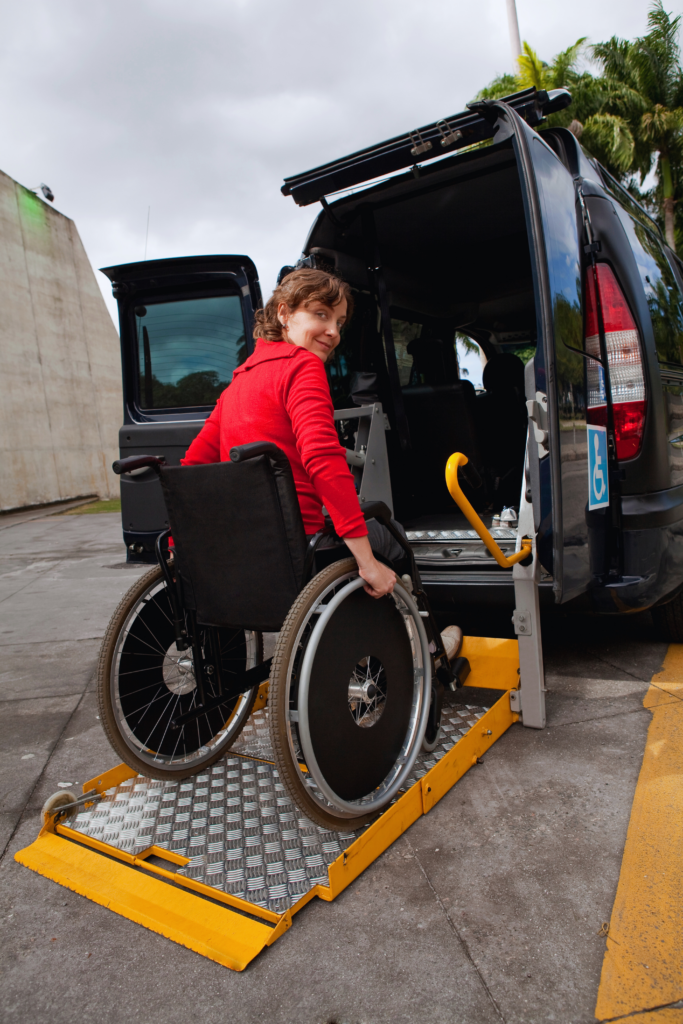
If your parent uses a wheelchair — book an ADA-equipped van with a hydraulic lift, 4-point securement, and a lap-and-shoulder belt, driven by someone trained for riders with cognitive and physical needs. Tell the company the chair type (manual or power) when booking. See our wheelchair transportation service for what proper equipment looks like.
If your parent can’t sit upright — for later-stage dementia with significant physical decline, hospice situations, or post-hospital moves, stretcher transportation with a trained two-person crew provides bed-to-bed transfer where your family never lifts or positions anyone.
If the appointments are recurring — neurology follow-ups, adult day programs, therapy — set up a standing schedule once so the same reliable service arrives every time without a weekly phone call. Consistency isn’t a convenience with dementia; it’s a care strategy. Our senior transportation service covers exactly this.
Dementia-Aware Transportation Across Hampton Roads
We provide door-to-door, dementia-briefed medical transportation throughout Hampton Roads — to neurology and memory-care appointments at Sentara and EVMS-area practices, adult day programs, and every clinic in between. Locally owned, headquartered in Virginia Beach, and expanding across Virginia:
One call sets up the whole plan — timing, briefing, escort, ride-along, and the return trip. Current rates are always on our pricing page, and our 5.0-star Google reviews include families we’ve driven through exactly the mornings this guide describes.
Frequently Asked Questions
What caregivers ask us most about dementia and medical transportation.
Can someone with dementia use medical transportation alone?
How do I get my parent with dementia to agree to the ride?
What should I tell the transport company?
What time of day is best for the trip?
Does Medicare cover medical transportation for dementia patients?
What if my parent uses a wheelchair?
Can I ride along with my parent?
Keep Reading
One Call Plans the Whole Trip.
Briefing, Escort & All.
Tell us about your mom or dad — their best time of day, their name, what calms them. We’ll handle the rest, with the patience these trips deserve. Locally owned in Virginia Beach, serving all of Hampton Roads.
Or call us directly: 1-757-440-3015On Time NEMT · 3837 Larchwood Drive, Virginia Beach, VA 23456 · Serving Chesapeake, Norfolk, Virginia Beach, and expanding across Virginia. This article is general caregiving information, not medical advice — for questions about your parent’s condition, capacity, or care, consult their physician or care team.