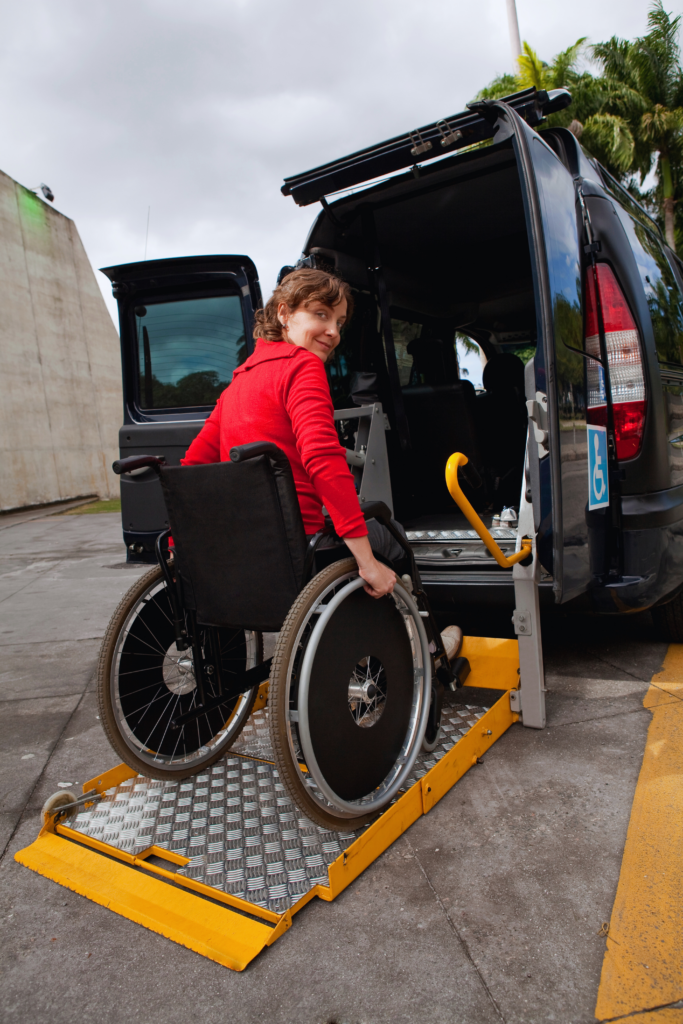
Every facility administrator can name the line items that hurt: agency staffing, supply costs, denied claims. But there’s one expense that almost never shows up on a report — and it may be costing you more than any of them. It’s the patient who didn’t make it to their appointment because the ride came an hour late. It’s the bed that stayed occupied an extra night because discharge transport never showed. It’s the dialysis chair that sat empty at 6 a.m.
Late medical transportation is the most expensive problem your facility isn’t measuring. Below, we break down exactly where the money goes, why “the ride technically exists” isn’t the same as “the ride showed up on time,” and what changes the moment you switch to a transport partner whose entire model is built on punctuality.
Figures reflect widely cited U.S. healthcare-industry and American Hospital Association estimates. Your facility’s exposure depends on patient mix and volume.
Late Isn’t a Scheduling Nuisance. It’s a Financial Leak.
When people talk about transportation barriers in healthcare, they usually mean the patient who has no ride at all. That’s real — an estimated 3.6 million Americans delay or skip care each year because they can’t get there. But facilities in Hampton Roads are bleeding just as much from a quieter problem: rides that exist on paper but arrive late, arrive at the wrong place, or never arrive at all.
A late ride produces the exact same outcome as no ride: an empty slot, a missed treatment, a delayed discharge. The difference is that everyone assumed it was handled — so no one planned around it. That’s what makes late transport so corrosive. It fails silently, and the cost lands on your facility, not the broker who dispatched the vehicle.
5 Hidden Costs of Unreliable Medical Transportation
1. The Empty-Slot Revenue Loss
When a patient doesn’t arrive, that appointment slot is gone for good — you can’t restock it like inventory. Industry estimates put the average loss at roughly $200 per missed visit, climbing far higher for specialty, procedural, and imaging slots where expensive equipment and staff sit idle. A single provider running a modest 7% no-show rate can quietly lose tens of thousands of dollars a year — and transportation drives a large share of those misses.
2. The Staff-Time Tax
Every late or failed ride sets off a chain reaction at the front desk: calling the patient, calling the broker, documenting the no-show, then trying to backfill the slot. Studies peg this at 15–25 minutes of staff labor per missed appointment. Multiply that across a busy week and you’re paying skilled schedulers and case managers to chase vehicles instead of caring for patients — one of the fastest ways to burn out your best people.
3. Bed-Blocking & Discharge Delays
A patient who is medically cleared to leave but has no confirmed ride keeps occupying a bed that a new admission needs. One state hospital association recently reported hundreds of thousands of bed-days lost to patients waiting on post-acute placement and discharge logistics. At hospital-level daily costs, a transport delay of even a few hours per discharge adds up to a staggering, invisible expense — and it throttles throughput from the ED all the way up.
4. Avoidable Readmissions & Penalties
When patients miss the follow-up visit, the rehab session, or the medication pickup after discharge, small problems become emergencies. Patients without reliable transportation are 2.6× more likely to be hospitalized for preventable conditions. Those readmissions cost the U.S. system an estimated $15–20 billion a year — and under value-based reimbursement, they can trigger penalties that hit your facility directly.
5. Patient Attrition & Reputation Damage
A patient stranded after an appointment — or one who missed care because their ride failed — remembers it. They tell family. They leave a review. They change providers. The lifetime value of a lost patient dwarfs the single missed slot, and in a connected community like Hampton Roads, word travels fast. Reliable transport isn’t a courtesy; it’s patient retention.
What This Actually Costs — A Simple Example
Numbers make the hidden cost visible. Here’s an illustrative model for a mid-sized practice. Plug in your own volume and the picture sharpens quickly.
| Factor | Conservative | Moderate |
|---|---|---|
| Appointments per month | 1,000 | 1,000 |
| Transport-related no-show rate | 4% | 8% |
| Missed visits / month | 40 | 80 |
| Lost revenue @ $200/visit | $8,000 | $16,000 |
| + Staff recovery time (20 min @ $25/hr) | ~$333 | ~$667 |
| Estimated annual exposure | ~$100,000 | ~$200,000 |
Illustrative only. Excludes bed-day, readmission-penalty, and patient-attrition costs — which for hospitals and dialysis centers often dwarf the figures above.
Tired of explaining away missed appointments?
Set up reliable, on-time transport for your patients across Chesapeake, Norfolk & Virginia Beach.
Talk to On Time NEMT →The High-Stakes Case: Dialysis & Chronic Care
Nowhere is late transport more dangerous — or more expensive — than in recurring, life-sustaining care. A dialysis patient typically needs transport three times a week, every week. A late ride doesn’t just cost one slot; it shortens or skips a treatment, which can send that patient straight to the emergency department. For your center, that’s a missed treatment, a disrupted schedule, and a high-acuity event that was entirely preventable.
The same logic applies to wound care, infusion, cardiac and pulmonary rehab, and post-op follow-up. These are exactly the patients who most need a partner whose model is built on showing up on time — which is why so many Hampton Roads facilities route their recurring riders to a dedicated provider. Learn more about our dialysis transportation service and our broader medical transportation options.
“A Ride Exists” Is Not the Same as “The Ride Showed Up”
Most facilities treat transportation as a social-determinants checkbox: hand the patient a broker number or a resource list and consider it solved. The trouble is that broker networks are built for volume, not reliability. A request gets dispatched to whichever subcontractor is available — with no real accountability for whether the vehicle actually arrives on time. Patients get stranded. Beds stay full. Your staff makes the calls.
The fix isn’t more rides. It’s accountable, on-time rides from a partner who treats punctuality as the entire product — not a bonus. That single shift is what turns transportation from a liability back into a quiet asset for your facility.
Unreliable Transport vs. On Time NEMT
| What Your Facility Needs | Typical Broker / Rideshare | On Time NEMT |
|---|---|---|
| On-time arrival | Unpredictable; no guarantee | On-time guarantee — the entire model |
| Accountability | Dispatched to anonymous subcontractor | One direct partner you can call |
| Wheelchair / ADA access | Hit or miss | Ramp-equipped, ADA-compliant vans |
| Patient experience | Curb-to-curb, rushed | Door-to-door, limousine-level care |
| Payment | Medicaid hoops, waitlists, paperwork | Private-pay, no Medicaid required |
Built for Hampton Roads — Growing Across Virginia
On Time NEMT is a private-pay, non-emergency medical transportation partner serving healthcare facilities throughout the 757. We provide door-to-door, wheelchair-accessible rides with a single, simple promise: we show up on time, every time. Our roots are in Chesapeake, Norfolk, and Virginia Beach — and we’re actively expanding to serve facilities across all of Virginia, with long-distance trips up to 240 miles.
If your facility is ready to stop absorbing the hidden cost of late transport, becoming a transport partner takes one conversation. Explore our facility partnership program or see where we serve.
Frequently Asked Questions
How much does late or missed transportation really cost a healthcare facility?
Industry estimates put the average lost-revenue value of a single missed appointment near $200, and missed appointments cost the U.S. healthcare system roughly $150 billion a year. Transportation is responsible for an estimated 25–50% of those misses. Once you add staff recovery time, bed-blocking, and avoidable readmissions, a mid-sized facility’s annual exposure can easily reach six figures.
Why is “late” transport as costly as having no transport at all?
Because the outcome is identical — an empty slot, a missed treatment, a delayed discharge — but no one planned around it. The appointment was assumed to be covered, so the slot wasn’t backfilled and the bed wasn’t reassigned. Late transport fails silently, which is exactly why it’s so easy to overlook on a budget.
How does unreliable transportation affect hospital discharges and readmissions?
A medically cleared patient with no confirmed ride keeps occupying a bed a new admission needs, driving up costly bed-days. And when patients miss post-discharge follow-ups because their ride failed, minor issues escalate — patients without reliable transportation are about 2.6× more likely to be hospitalized for preventable conditions, fueling readmissions that can carry direct financial penalties.
Does On Time NEMT work directly with facilities in Chesapeake, Norfolk, and Virginia Beach?
Yes. On Time NEMT partners with hospitals, dialysis centers, skilled nursing facilities, clinics, and care coordinators throughout Hampton Roads, with expansion underway across all of Virginia. We’re a private-pay provider — no Medicaid, brokers, or waitlists — offering door-to-door, wheelchair-accessible rides. Call 1-757-440-3015 or visit our Become a Partner page.
What kinds of recurring medical trips do you handle for facilities?
Dialysis, infusion, wound care, cardiac and pulmonary rehab, physical therapy, hospital discharges, and routine follow-up visits — the recurring, time-sensitive trips where reliability matters most. We provide ambulatory and wheelchair-accessible transport up to 240 miles throughout Virginia.
Stop Paying the Hidden Cost of Late Rides
Reliable, on-time, door-to-door NEMT for your patients in Chesapeake, Norfolk, Virginia Beach — and increasingly, all of Virginia. Let’s protect your schedule, your beds, and your bottom line.