Ambulance or Medical Transport? How to Know Which One You Actually Need
The hospital says Dad’s ready for discharge, he can’t sit up yet, and someone at the nurses’ station says “you’ll need to arrange transport.” Transport… meaning what? An ambulance? A stretcher van? Are those the same thing? Families make this decision under pressure with almost no information — and getting it wrong means either a shockingly large ambulance bill for a ride that didn’t need one, or worse, too little care for a ride that did. Three questions sort it out every time.
911 ambulance = a possible emergency, now or during the ride. Non-emergency ambulance = no emergency, but the patient needs medical care or monitoring during the trip (usually arranged by the hospital). NEMT medical transport = the patient is medically stable and needs equipment or assistance — a wheelchair van, a stretcher because they can’t sit upright, or a trained arm from door to check-in. The key insight most families miss: a stretcher is not an ambulance. Stable-but-lying-down is an NEMT trip at a fraction of ambulance cost. When in any doubt about stability — 911.
The Three Questions — Ask Them In Order
Every transportation decision resolves with three questions. The order matters — stop at the first “yes.”
Is this an emergency — or could it become one during the ride?
Chest pain or pressure. Signs of stroke (face drooping, arm weakness, slurred speech). Severe bleeding. Difficulty breathing. Sudden confusion or unresponsiveness. A serious fall, especially with head impact or inability to get up. New, severe pain. Anything where a doctor would say “that can’t wait.”
Does the person need medical care or monitoring during the trip?
Oxygen that must be managed or titrated by a professional. IV medications running. Cardiac monitoring. Vitals that need watching. A physician’s order requiring EMT attendance for the transfer. This is about what must happen in the vehicle — not how the person rides.
Is the person medically stable, but needing equipment or help?
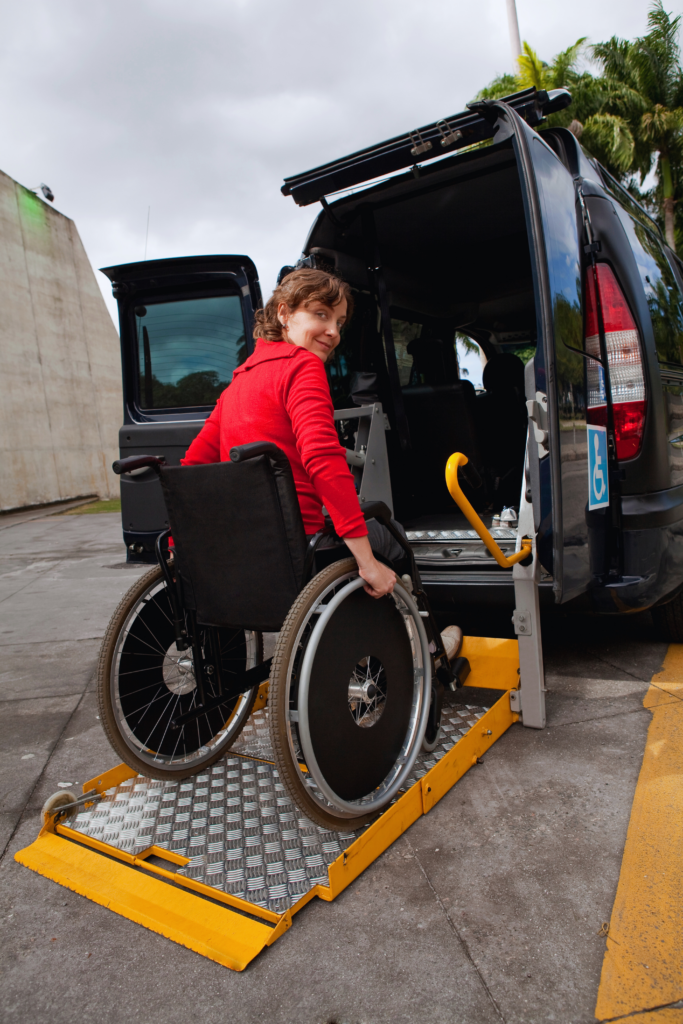
Uses a wheelchair. Can’t sit upright and needs to travel reclined or lying down. Needs a trained arm from the front door to the check-in desk. Needs a driver who handles the securement, the transfer, and the timing. Nothing medical has to happen during the ride — the ride just has to be done right.
That’s the whole decision. Emergency → 911. Care during the ride → ambulance. Stable but needs help → NEMT. Everything below is detail — including the one confusion that costs families the most money.
The Confusing Middle: A Stretcher Is Not an Ambulance
Here’s the sentence that saves families the most money and worry: a stretcher describes how someone rides; an ambulance describes what happens during the ride.
Because ambulances have stretchers, most people assume “can’t sit up” automatically means “needs an ambulance.” It doesn’t. A bedbound hospice patient going to a family wedding, a post-surgical patient discharging home, a resident who travels reclined to dialysis — if they’re medically stable, they need a stretcher vehicle, not a medical crew. That’s exactly what non-emergency stretcher transport is: a properly equipped van, trained two-person handling, secure and dignified reclined travel — without paying for paramedics and life-support equipment the trip doesn’t need.
The reverse is equally true and equally important: a patient who can sit up but needs cardiac monitoring en route needs an ambulance, comfortable seating or not. The dividing line is never the position of the body. It’s whether medical care must happen in the vehicle.

The Three Services Compared
| What matters | 911 Emergency Ambulance | Non-Emergency Ambulance | NEMT Medical Transport |
|---|---|---|---|
| When it’s right | Emergency now, or could become one | Stable, but needs medical care/monitoring en route | Stable; needs equipment or assistance only |
| Who’s on board | EMTs/paramedics, life-support equipment | EMT crew (BLS level) | Trained transportation professionals |
| How it’s booked | Call 911 — immediate dispatch | Scheduled — usually via hospital/discharge planner | Scheduled directly by family or facility — 1-757-440-3015 |
| Rider position | Stretcher | Stretcher | Seated, wheelchair, or stretcher — matched to need |
| Cost profile | Highest — and appropriate for emergencies | High; insurance requires documented medical necessity | Flat, transparent rates — published here |
| Best mental model | Emergency room on wheels | Scheduled medical care that happens to travel | Professional transportation with trained hands |
Real Situations, Sorted
Dad has chest pressure and looks gray. Not a transportation decision at all.CALL 911
Mom’s discharged after hip surgery, can’t sit upright for the ride home. Stable + lying down = stretcher NEMT, bed-to-bed.NEMT STRETCHER
Grandma fell, hit her head, seems “mostly fine.” Head impact in a senior is never a wait-and-see.CALL 911
Weekly dialysis, uses a wheelchair, medically stable. The textbook NEMT standing schedule.NEMT WHEELCHAIR
Hospital-to-facility transfer; oxygen must be monitored by staff en route. Care happens in the vehicle — ask the discharge planner to arrange it.NON-EMERG AMBULANCE
Routine oncology infusion appointment, walks with a cane, needs an arm. Assistance, not medical care.NEMT AMBULATORY
Bedbound hospice patient wants to attend her granddaughter’s wedding. One of the most meaningful trips we do.NEMT STRETCHER
“He’s breathing a little funny but insists he’s OK.” Breathing changes are Question 1, and unsure means yes.CALL 911
Three things never to do
Never downgrade an emergency to save money. No NEMT van — ours included — is the right answer to chest pain, stroke signs, or breathing trouble. We will tell you to hang up and call 911, and we mean it.
Never book an ambulance as “the safe default” for a stable patient. It’s not safer — it’s the same ride with equipment nobody uses, at many times the cost, and insurance frequently denies it as not medically necessary.
Never let “arrange your own transport” fluster you at discharge. Ask the care team one question — “does she need medical care during the ride, or just help and equipment?” — and the answer sorts everything.
The Cost Reality Nobody Explains at Discharge
An ambulance is a rolling emergency room: certified medical crew, life-support equipment, medications, and constant readiness. For a true emergency or a medically necessary transfer, it’s worth every dollar and usually the only right answer.
But when a stable patient rides an ambulance simply because nobody explained the alternatives, two expensive things happen: the bill reflects all that medical capability the trip never used, and the insurance claim frequently comes back denied as not medically necessary — leaving the family holding it. Ambulance billing is also commonly out-of-network, which is how routine transfers become four-figure surprises.
NEMT pricing works like transportation, because that’s what it is: flat rates quoted before the trip, matched to the service level — ambulatory, wheelchair, or stretcher. Our rates are published openly on our pricing page, and the deeper breakdown — including the hidden fees to watch for anywhere — is in What Does a Medical Ride Actually Cost?
The honest summary: match the service to the need. Paying ambulance prices for a stable ride wastes money; using budget transport for a medical-care ride risks far worse. The three questions exist so you never do either.
Stable Patient? That Trip Is Exactly What We Do
If your situation landed on NEMT — wheelchair, stretcher, or a steady arm — that’s our entire business: exact pickup times, door-to-door and bed-to-bed service, trained drivers, standing schedules for recurring treatment, and coordination directly with hospital discharge desks. Locally owned in Virginia Beach, serving all of Hampton Roads:
Not sure which side of the line your situation falls on? Call 1-757-440-3015 and describe it honestly — we’ll tell you plainly whether it’s an NEMT trip, a hospital-arranged ambulance transfer, or a 911 call, even when the answer isn’t us. That honesty is why our Google reviews sit at 5.0 — and when it is our trip, it arrives on time or it’s free.
Frequently Asked Questions
How do I know if I need an ambulance or medical transport?
Is stretcher transport the same as an ambulance?
What is a non-emergency ambulance (BLS) transfer?
Why do ambulance rides cost so much more?
Will Medicare or insurance pay for the ambulance?
Can NEMT take someone who uses oxygen?
Who arranges transportation for a hospital discharge?
Keep Reading
Stable, Scheduled, and Needs to Be On Time?
That’s Our Whole Job.
Wheelchair, stretcher, or a steady arm — exact pickup times, bed-to-bed care, and coordination with your discharge team. One call sorts out exactly which service your loved one needs, honestly.
Or call us directly: 1-757-440-3015On Time NEMT · 3837 Larchwood Drive, Virginia Beach, VA 23456 · Wheelchair, stretcher & ambulatory transport · Serving Chesapeake, Norfolk, Virginia Beach, and expanding across Virginia. For medical emergencies, always call 911.